Case Study: Integrated Patient Support for Psoriatic Disease

Background
The Challenge
-
People living with psoriatic disease (psoriasis and psoriatic arthritis) often face challenges starting and continuing treatment that can affect their health and quality of life.
-
Patients’ experiences, beliefs, and psychosocial factors play a key role in motivation and ongoing treatment adherence.
-
Understanding and addressing these factors can help support patients to stay engaged with their treatment and achieve better outcomes.
Our Behaviour Change Approach
-
Patient research explored the psychosocial challenges people face during treatment, including factors that can affect motivation and lead to treatment discontinuation.
-
Research with healthcare professionals helped build understanding of which patients may benefit most from treatment, to support appropriate and timely care.
-
Insights from clinicians also informed how patient needs, circumstances, and treatment suitability are considered in decision‑making.
The Solution
-
A programme designed to make the treatment experience easier and more supportive for people living with psoriatic disease.
-
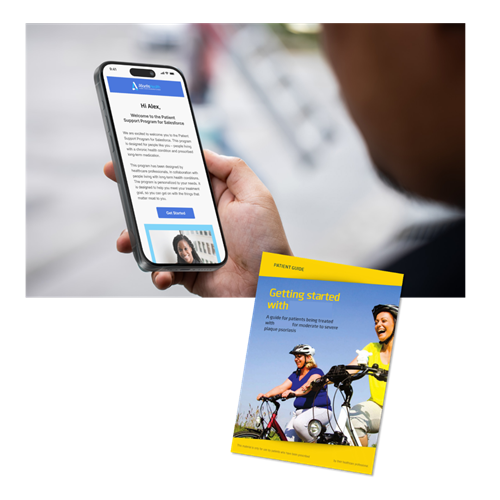
Clear, easy‑to‑use information and touchpoints that help patients understand what to expect and feel supported throughout their treatment journey.
-
Regular, timely communications (e.g., nurse-led calls, emails) to provide reassurance, answer questions, and support ongoing engagement with treatment.
-
Opportunities for patients to share their experiences and report how treatment is affecting their symptoms and quality of life, helping ensure care remains responsive to their needs.
The Impact
-
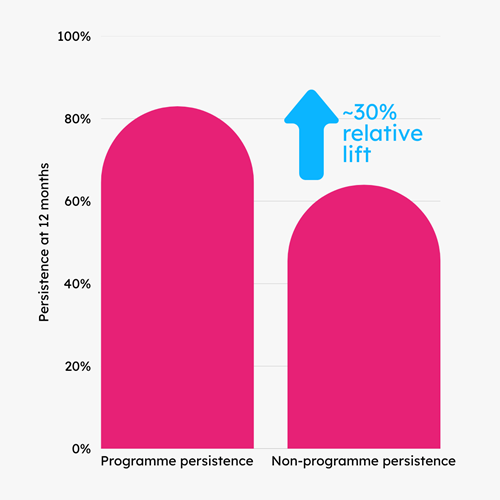
83% persistence at 12 months across enrolled patients vs non-programme1 persistence of 64% (approximately 30% relative lift in persistence)
-
HCPs reported high satisfaction with supporting services and ease of patient enrolment and management